


Centro per lo studio e la sperimentazione di strumentazione meteorologica

Welcome to KWOS website

Octocatfacebook icon 512 512Instagram AppIcon Aug2017 
UTC Time
English French German Italian
All about lightning

Scarica (solo in italiano):
Studio sull'LPLWS NASA

The phenomenon of lightning is actively investigated since 1752, when the American statesman and scientist B.Franklin one of the first established the electrical nature of lightning. As a whole the picture of formation of lightning is as follows. The terrestrial atmosphere is very good dielectric located between two conductors - a surface of the ground from below and the top layers of an atmosphere, including an ionosphere, from above. These layers are passive components of a global electric circuit. Between negatively charged surface of the ground and positively charged top atmosphere the constant potential difference of about 300.000 V is supported. According to the idea for the first time stated by Wilson in 20th years this ionosphere potential arises from thunder-storms which create global electric "battery". Lightning is a visible electric charge coming from a cloud, going to either another cloud or the earth.  Usually, thunder like the sound you are hearing accompanies lightning, especially during a thunderstorm.


Leggi di più >>>
All about satellites

Meteosat

There are two generations of active Meteosat satellites, Meteosat First Generation (MFG) and Meteosat Second

Generation (MSG), providing images of the full Earth disc, and data for weather forecasts.

Today, weather satellites scan the whole Earth, meaning not a single tropical storm or severe weather system goes undetected. The early detection and warnings they provide have saved thousands of lives.

Meteosat data is of unique value to nowcasting of high impact weather in support of safety of life and property.

It has been shown to improve weather forecasts and severe weather warnings which, in turn helps limit damage to property and benefits industry e.g. transport, agriculture and energy.
read more >>>

Il rilevamento della temperatura atmosferica

Ripropongo un articolo scritto nel 2003.

Il rilevamento della temperatura con i termometri a resistenza ed il calcolo dell’errore nella misura, dovuto alla radiazione solare ( schermi attivi e passivi ).


Introduzione

In questa scheda ho cercato di focalizzare l’attenzione su quel tipo di termometri utilizzati spesso nelle stazioni meteorologiche automatiche degli amatori e professionisti: i termometri a resistenza.

Ho anche cercato di spiegare come la radiazione diretta sul sensore, possa influire sulla corretta misurazione della temperatura e quanto sia importante utilizzare la schermatura dello stesso.

La scheda è piuttosto tecnica ma già leggendola, senza soffermarsi troppo sulle formule, vi renderete conto di quanti e quali parametri entrano in gioco per effettuare una precisa misurazione della temperatura.


read more >>>

Scandriglia weather

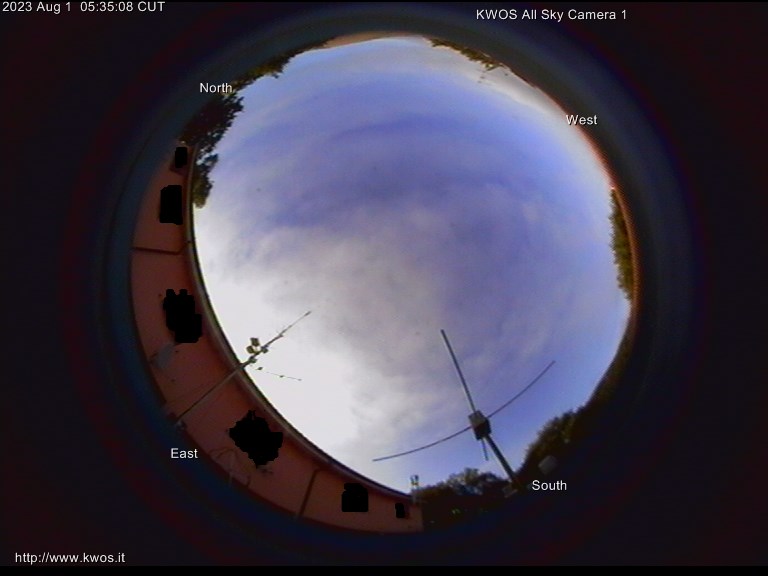
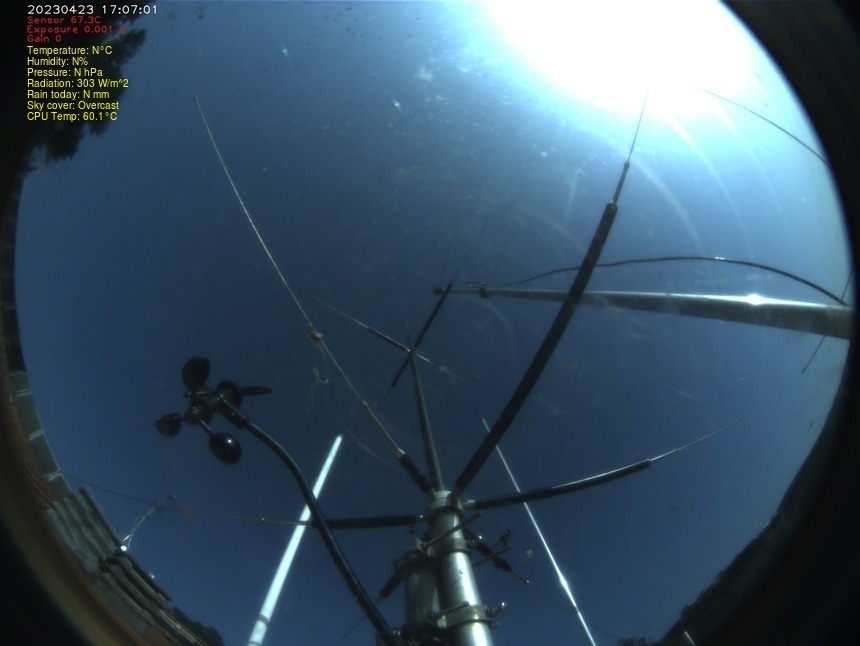
All Sky cameras


Copyright © 1998 - 2024 KWOS.org - KWOS.it - IW7CHV.org - IZ0QWM.org. All rights reserved.

Histats page for KWOS.it  - Histats page for KWOS.org - 
 
 -  Statscounter page for kwos.it

KWOS Coordinates

Grid locator: jn62je

Lat: 42°10' 07.3" N 
(42.168694°) 
Long: 
12°47' 09.8" E     
(12.786056°) 
CQ zone:
 15 
ITU zone:
 28

 
logo cisarlogo ara